

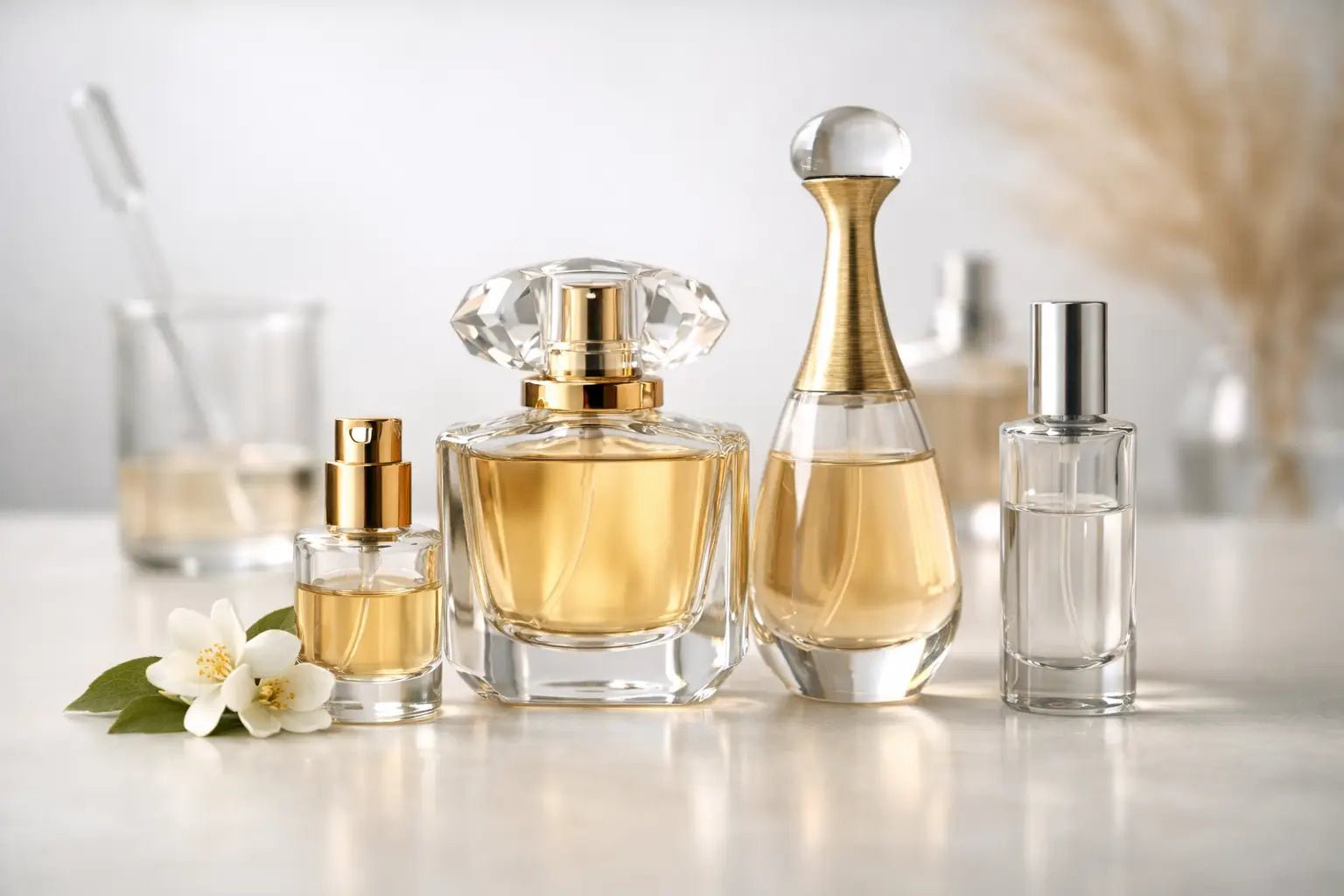
A fragrance can smell incredible in the first five minutes and still be the wrong buy if it disappears before lunch, overwhelms your office, or wears differently than expected. This guide to perfume concentration levels helps you read the label with more confidence, compare performance more realistically, and choose a scent that fits how you actually want to wear it.
Concentration matters, especially when you are shopping for the rich vanilla, amber, oud, musk, and spice profiles popular in Arabian perfumery. But it is not a simple promise of how many hours a fragrance will last. The percentage of aromatic materials affects intensity and wear, while the formula, your skin, the weather, and even your application make a real difference.
What perfume concentration actually means
Perfume is made from fragrance materials blended into a base, most often alcohol and sometimes water or oils. The concentration refers to the approximate amount of fragrance oil or aromatic compound in that blend. Generally, a higher concentration means less alcohol and a fuller, slower-evolving scent experience.
That does not mean the highest concentration is automatically the best option. A concentrated sweet amber may feel perfect on a cold night but too heavy for a crowded summer event. A lighter citrus or aromatic fragrance may be easier to reapply and more comfortable in heat. The right concentration is the one that matches your scent profile, routine, and preferred projection.
Also, concentration categories are not regulated with one universal standard. Brands can use slightly different formulas and naming conventions. Treat the label as a helpful starting point, not a guarantee stamped in stone.
Guide to perfume concentration levels: the main types
Parfum or extrait de parfum
Parfum, also called extrait de parfum or pure perfume, usually sits at the highest end of the concentration scale. It commonly contains around 20% to 40% fragrance materials, though the actual formula varies by brand.
Expect a dense, polished scent that often stays close to the skin while lasting for many hours. Parfum can project strongly in the opening, but it is often known more for depth than sheer volume. Notes such as oud, rose, saffron, sandalwood, vanilla, amber, and musk can feel especially luxurious at this level because they have time to unfold gradually.
This is a smart choice for date nights, formal occasions, cool weather, or anyone who wants a small number of sprays to go a long way. The trade-off is price and versatility. If you prefer a bright, airy fragrance cloud or like switching scents during the day, an extrait may be more than you need.
Eau de parfum, or EDP
Eau de parfum is one of the most popular formats for good reason. It often contains roughly 15% to 20% fragrance materials and offers a strong balance of lasting power, projection, and everyday wearability.
For many shoppers, EDP is the sweet spot. It can carry a fragrance from a morning commute into the evening without requiring constant reapplication, particularly with warm woody, gourmand, musky, and amber-based scents. Many viral Arabic fragrances are sold as eau de parfum because that format supports the bold performance buyers expect while remaining practical for regular use.
An EDP does not always outlast every EDT. A well-built eau de toilette with long-lasting base notes can perform better than a softer EDP formula. Still, if longevity is high on your list, EDP is a dependable category to start with.
Eau de toilette, or EDT
Eau de toilette generally contains about 5% to 15% fragrance materials. It is usually lighter and more refreshing than an EDP, with a brighter opening and a less weighty dry-down.
EDT works beautifully for daytime, warm climates, the gym after a shower, casual plans, and workplaces where you want to smell put together without taking over the room. Citrus, fresh woods, aquatic notes, lavender, herbs, and clean musks often feel especially natural in this concentration.
Do not mistake lighter for weak. Some EDTs project confidently for the first few hours and leave a clean skin scent afterward. If you want an all-day result, bring a travel atomizer or apply a few extra sprays to clothing, testing first on a hidden area to make sure the fabric will not stain.
Eau de cologne, or EDC
Eau de cologne usually has around 2% to 5% fragrance materials. In the traditional sense, it is a light, brisk style built around citrus, herbs, neroli, and aromatic notes. It is designed to feel refreshing rather than dramatic.
EDC is ideal when you want a quick burst of freshness after a shower or before stepping out in hot weather. Its shorter wear time is part of the experience, not a flaw. Think of it as an easy reset that you can reapply freely.
Be careful with the word “cologne.” In the US, people often use it to mean any fragrance marketed to men. That marketing label does not tell you the concentration. Check whether the bottle says eau de toilette, eau de parfum, parfum, or another format if performance matters to you.
Eau fraîche, body mist, and fragrance mist
Eau fraîche and body mists are among the lightest fragrance formats, often below 3% concentration. They are made for easy, generous application and a soft, casual effect.
They are great for layering, lounging, warm days, or anyone who finds traditional perfume too intense. A mist can add a pleasant scent to hair or body care routines, but it should not be purchased with the expectation of all-day projection. Reapplication is normal.
Perfume oils and alcohol-free scents
Perfume oils deserve their own category because they do not always fit neatly into alcohol-based concentration labels. They can be highly concentrated, and their oil base tends to create a close, smooth, long-wearing scent on the skin.
Many fragrance lovers enjoy oils for layering or for a more personal scent trail. Roll a small amount onto pulse points, then add a complementary spray fragrance if you want more lift and projection. Since oils sit differently on skin, test before committing, particularly with powerful oud, amber, or sweet gourmand blends.
Why concentration does not predict performance by itself
A fragrance’s note structure often matters as much as its concentration. Lemon, bergamot, and airy aquatic notes naturally fade faster than vanilla, patchouli, resins, woods, and musks. An EDT built around cedar and amber can outlast an EDP centered on delicate citrus and white florals.
Your skin also changes the result. Dry skin may absorb fragrance faster, while well-moisturized skin often holds it longer. Heat can make a scent project more, but it can also make sweet or spicy notes feel much stronger than they did in an air-conditioned room.
Then there is nose fatigue. You may stop noticing a fragrance because your brain has adjusted to it, even though other people can still smell it. Before adding more sprays, ask someone you trust for an honest read or check whether the scent is still present on your clothing.
How to choose the right concentration for your routine
Start with the occasion, not just the performance claim. For work, class, errands, or warm weather, an EDT or a carefully applied EDP offers an easy balance. For evenings, celebrations, and colder months, an EDP, parfum, or rich perfume oil can create the fuller presence many shoppers want.
Next, consider the scent family. A fresh marine EDP and a smoky oud EDP may share the same label, yet they will feel completely different in the air. If you love bold Arabic-inspired scents, begin with fewer sprays than you think you need. Two sprays of a strong amber-vanilla or oud blend can be enough for a confident, premium trail.
Finally, shop for what you will enjoy wearing, not the biggest number on a label. Value is not only about ounces or concentration. It is about getting a fragrance that smells original, performs for your needs, and earns a place in your rotation instead of sitting untouched on a shelf.
Get more from the fragrance you already own
Apply fragrance to clean, moisturized skin, focusing on pulse points such as the wrists, neck, and inner elbows. Unscented lotion can help reduce the dryness that makes scent disappear quickly. Avoid aggressively rubbing your wrists together, which can disturb the opening and make the fragrance develop unevenly.
For added longevity, lightly mist clothing from a safe distance and avoid delicate fabrics. One spray on a shirt or jacket can extend the dry-down, especially with woody or musky scents. Keep bottles away from direct sun, steamy bathrooms, and extreme heat so the formula stays true over time.
The best bottle is not necessarily the strongest one. Choose the concentration that makes you reach for it without hesitation, then let the scent do what a great fragrance should: make an everyday moment feel more considered.


