

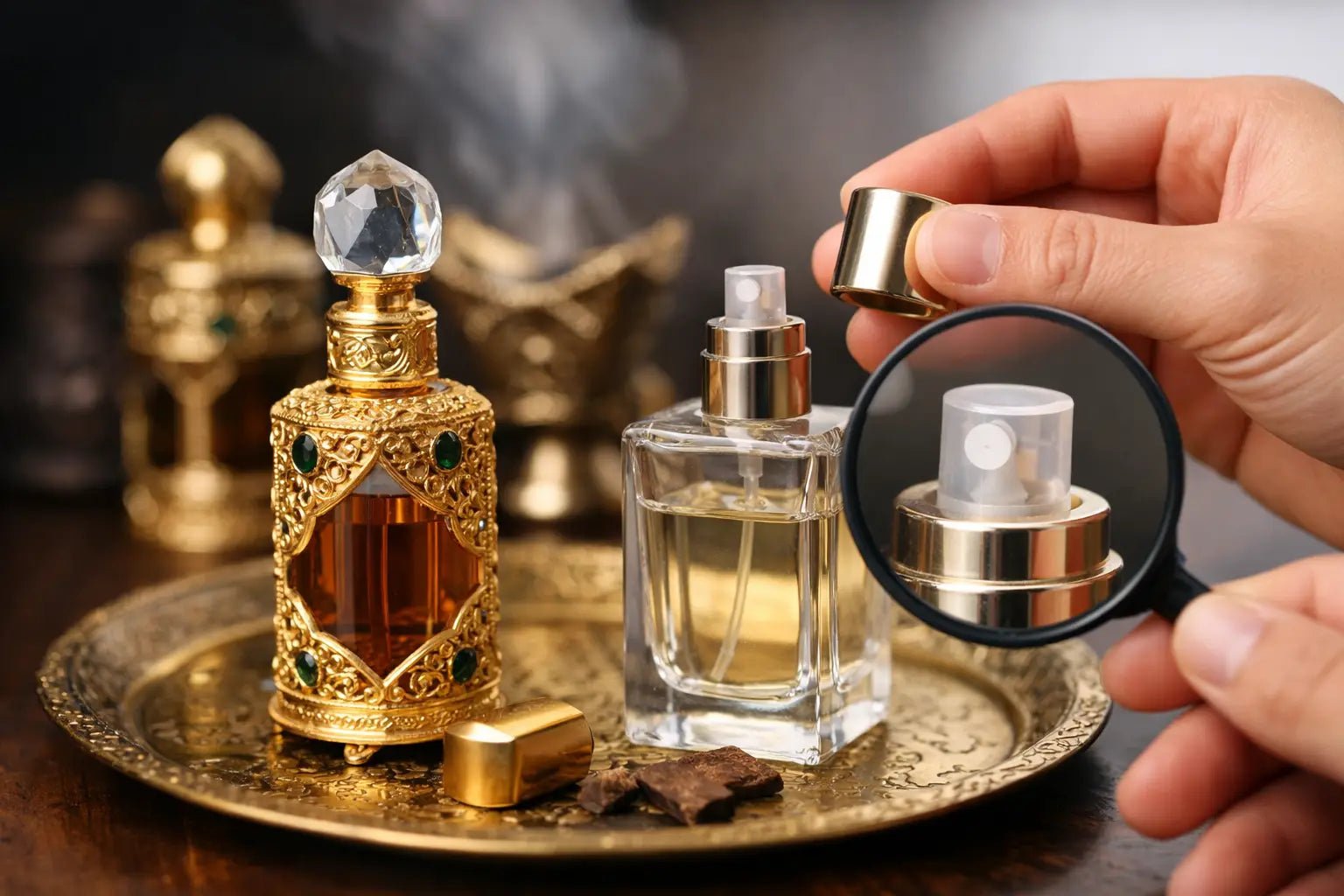
You usually notice a fake Arabian fragrance after the money is gone. The box looked close enough, the bottle photos seemed legit, and the price felt like a steal. Then the scent disappears in an hour, the cap feels flimsy, or the juice smells harsh instead of smooth. If you are wondering how to spot fake Arabian perfume before that happens, the good news is you do not need to be a collector to catch the red flags.
Arabian perfumes have exploded in the US for a reason. Shoppers want richer scent profiles, stronger performance, and more value than many mainstream designer releases offer. That popularity has also made well-known names like Lattafa, Afnan, Armaf, Rasasi, Maison Alhambra, and Paris Corner bigger targets for counterfeiters. The better the hype, the more likely someone tries to copy it.
How to spot fake Arabian perfume before you buy
The first thing to check is not the fragrance itself. It is the seller. Most counterfeit problems start with sketchy sourcing, not with subtle bottle details. If a store is vague about authenticity, ships from unclear locations, has no real customer support, or uses stolen-looking product photos, that is your first warning.
Price matters too, but not in the way most people think. Arabian perfumes are known for value, so affordable does not automatically mean fake. A bottle from a trusted Middle Eastern house can be far less expensive than a luxury designer scent and still be 100% original. The problem is when the price is wildly below normal market range with no explanation. If a fragrance that usually sells in a consistent price band suddenly shows up for half that amount from an unknown seller, caution makes sense.
It also helps to look at the product listing quality. Authentic retailers usually provide clear brand names, exact fragrance titles, bottle sizes, and original packaging photos. Counterfeit listings often have sloppy spelling, mismatched titles, generic descriptions, or confusing variations that blend multiple products into one page.
Packaging tells you a lot
With many Arabic fragrances, presentation is part of the appeal. Boxes often use textured finishes, metallic accents, embossed logos, velvet inserts, or carefully fitted trays. Counterfeits tend to imitate the overall look without getting the details right.
Start with the outer box. Look for uneven printing, faded colors, blurry logos, cheap cardboard, weak glue lines, or loose plastic wrap. On authentic products, the wrap should feel clean and tight, not overly thick, wrinkled, or randomly sealed. If the box art looks slightly off from known brand packaging, trust that instinct. Fakes are often close, not exact.
Spelling and typography are another easy filter. Well-known fragrance houses do not usually make basic errors on brand names, ingredient text, or product labels. A missing accent, inconsistent font, bad alignment, or low-resolution printing may sound minor, but those small production mistakes are common with counterfeits.
Check the batch code and barcode
Batch codes are not glamorous, but they matter. Many authentic fragrances include a printed or stamped batch code on the box and bottle. Those markings should usually match. If the box has one code and the bottle has another, or one has no code at all, that is a concern.
Barcodes can help, but they are not perfect proof on their own. Some fake products copy valid barcodes. Think of them as one checkpoint, not the final answer. What you want is consistency across the full package - proper labeling, matching codes, and clean manufacturing details.
The bottle should feel premium, not rushed
Arabian perfume brands often put serious effort into bottle design. Even when the price is accessible, the presentation usually feels intentional. A fake bottle often gives itself away the second you hold it.
Look at the glass first. Authentic bottles are typically clean, even, and well-finished, without bubbles, rough seams, or visible flaws. The cap should fit securely. It should not wobble, sit crooked, or feel like thin plastic unless the original design actually uses lightweight materials.
The atomizer is one of the most overlooked clues. On a genuine bottle, the sprayer usually delivers a fine, controlled mist. With fakes, you may get a weak stream, dripping around the neck, or an uneven spray pattern. That does not mean every imperfect sprayer is counterfeit, but paired with other issues, it becomes more telling.
Pay attention to label placement and logo quality too. Crooked labels, peeling edges, messy adhesive, and inconsistent metallic finishes often show up on fake products. Premium-looking brands should still look premium up close.
Smell and performance are major clues
This is where many people get fooled. A fake does not always smell terrible on the first spray. Some counterfeits are designed to mimic the opening and fall apart later. That is why the full wear matters.
Authentic Arabian perfumes often have a more structured development. You may notice a distinct opening, a richer heart, and a base that settles in with depth. Even simpler compositions usually smell blended, not chaotic. A counterfeit may hit you with strong alcohol at the start, feel flat in the middle, or vanish much faster than expected.
Performance is not identical from scent to scent, so this part depends on the fragrance. Not every original Arabian perfume is nuclear, and not every soft scent is fake. Still, if a fragrance known for strong longevity suddenly lasts 45 minutes and becomes almost skin-deep immediately, that is suspicious.
Watch for harsh alcohol and chemical edges
Many authentic perfumes open with some alcohol because that is normal in spray fragrances. The difference is in how quickly it smooths out. A fake often has a rough, sharp blast that lingers longer than it should. You may also notice an artificial sweetness, burnt plastic effect, or strange sourness that does not match the original profile people know.
Color can be another clue, though not a perfect one. If the juice looks dramatically darker, cloudier, or more neon than expected, be careful. Formula updates and lighting can affect appearance, so use this alongside other checks rather than treating it as final proof.
Where you buy matters more than one tiny detail
If you are trying to figure out how to spot fake Arabian perfume, do not get stuck obsessing over one photo or one code. The strongest signal is usually the total picture. Trusted retailer, consistent packaging, proper bottle quality, and expected scent performance together tell you much more than any single clue.
That is why buying from a seller focused on authentic inventory matters. A reliable fragrance retailer should be clear about the brands they carry, easy to contact, and consistent in how they present products. Fast US shipping, responsive customer support, and straightforward product information are not just convenience features. They are trust signals.
Marketplace listings are where things get messy. Some are sold by legitimate resellers. Some are mixed with third-party stock of questionable origin. That does not mean every marketplace purchase is fake, but it does mean you need to read more carefully. Seller history, review quality, fulfillment source, and return policy all matter.
Common fake perfume red flags shoppers miss
A lot of counterfeit purchases happen because the warning signs seem small in the moment. A bottle arrives without proper protective inserts. The cap finish looks slightly cheaper than expected. The seller changes the product title after you buy. None of these alone confirms a fake, but together they tell a story.
Be careful with reviews that sound generic or repetitive. Real fragrance buyers tend to mention scent notes, performance, packaging, or shipping details. Fake reviews often stay vague and overly enthusiastic. The same applies to product photos. If every image looks copied from different websites with different backgrounds and inconsistent bottle details, slow down.
Another missed red flag is timing. Counterfeiters move fast on viral fragrances. When a scent starts trending on TikTok or selling out across authentic stores, fake listings often appear almost immediately. High demand creates urgency, and urgency makes shoppers less careful.
What to do if you think your perfume is fake
Do not keep wearing it just because the bottle looks expensive. If the scent seems off, the packaging raises questions, or your skin reacts badly, stop using it. Take clear photos of the box, bottle, batch code, and seller listing. Keep your receipt and shipping details.
Then contact the seller directly and ask specific questions. An authentic retailer should be able to address sourcing and order concerns clearly. If the response is evasive, delayed, or copied from a script, that tells you something too.
If you are still unsure, compare your bottle against verified product images from a trusted fragrance retailer that specializes in original Arabian scents. One clean comparison can reveal differences in font, bottle shape, cap finish, or box details that were easy to miss before. Retailers like Ezenzia build trust by focusing on authentic stock, straightforward service, and products shoppers actually want, which takes a lot of guesswork out of the process.
The smartest move is not becoming an expert counterfeiter detective. It is buying from places that make authenticity easy to trust, so your next bottle smells like a win the moment it lands on your doorstep.


