

The first time someone tries oud, the reaction is usually immediate. Either it smells expensive, deep, and addictive - or it catches them off guard. That is exactly why so many shoppers ask, what does oud smell like? It is one of the most talked-about notes in perfumery, but it is also one of the most misunderstood.
Oud does not smell like one single thing. It can be woody, smoky, leathery, resinous, sweet, earthy, or slightly animalic depending on the source, the quality, and how the perfumer builds the fragrance around it. In Arabic perfumery especially, oud is less of a simple "wood note" and more of a whole scent experience.
What does oud smell like in perfume?
At its core, oud smells dark, rich, and textured. Think warm wood soaked in resin, touched with smoke, and softened by sweetness or spice. Some oud fragrances lean clean and smooth. Others feel bold, shadowy, and almost raw.
If you are new to it, the easiest way to understand oud is to compare it to more familiar scent families. It has the depth of woods, the richness of amber, the dryness of smoke, and sometimes the sensual edge of leather or musk. That complexity is why oud perfumes often smell more luxurious and more noticeable than standard woody fragrances.
Still, not every oud fragrance will hit the same. One bottle may smell polished and slightly sweet, while another may come across medicinal, earthy, or intense. That is not a flaw. It is part of what makes oud so interesting.
Why oud smells different from one fragrance to another
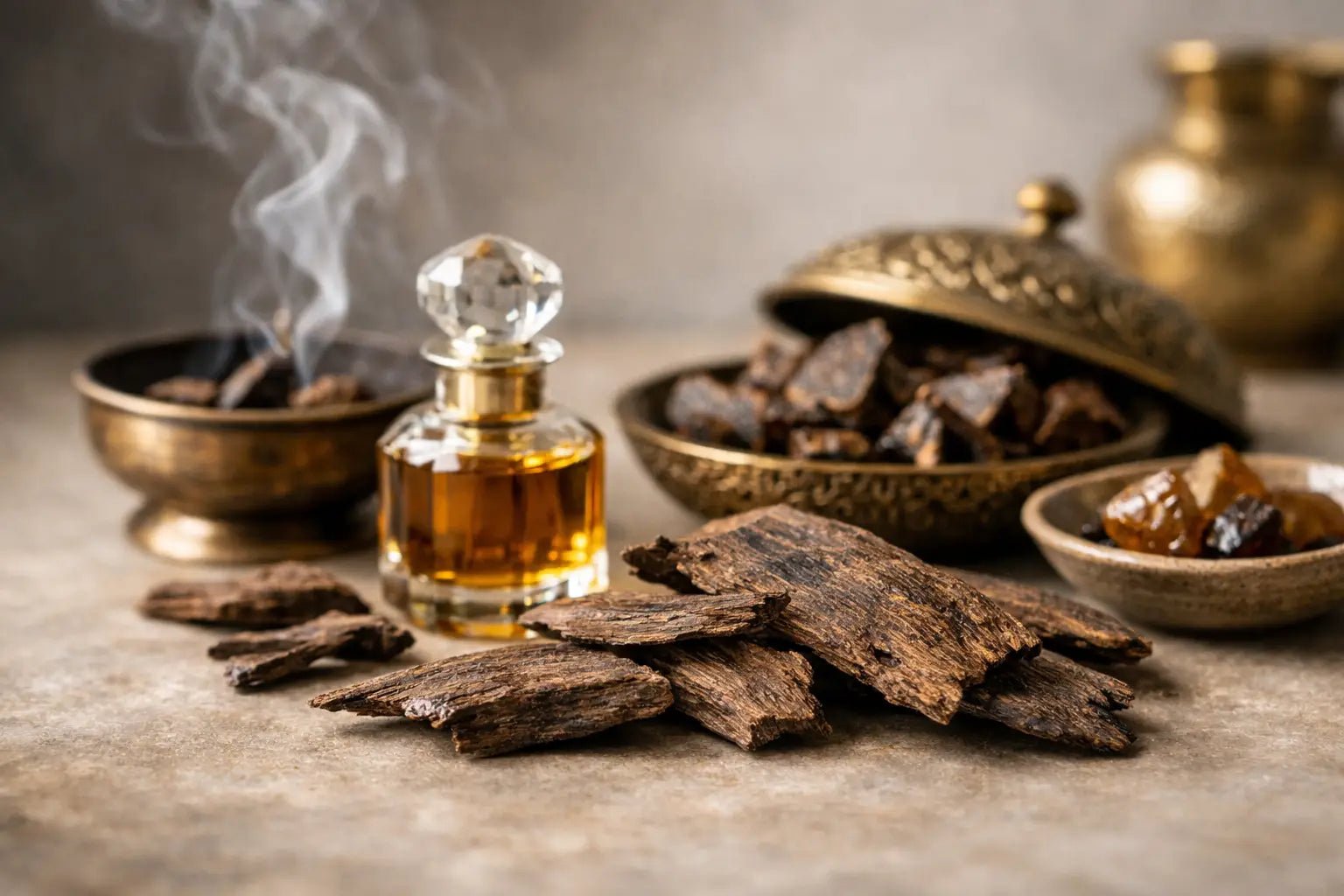
Oud comes from agarwood, a resinous heartwood that forms when certain trees react to infection or damage. That resin creates the material prized in perfumery. Natural oud is rare and expensive, which is why many modern fragrances use oud accords or blends inspired by the scent profile of real oud.
This matters because when people ask what does oud smell like, they are often smelling a perfumer's interpretation rather than a single raw ingredient. Some brands create a smoother, more wearable oud for everyday use. Others push the darker side with smoke, animalic facets, or heavy resin.
The supporting notes make a huge difference too. Oud paired with rose smells elegant and romantic. Oud with saffron can feel spicy and plush. Oud with vanilla turns creamier and sweeter. Oud with leather or patchouli can go darker, drier, and more intense.
The main scent facets of oud
The best way to describe oud is in layers. Most oud-based perfumes pull from several of these at once.
Woody and resinous
This is the backbone of oud. It often smells like dense wood with a rich, almost sticky warmth. Not fresh-cut lumber or a clean cedar plank - more like polished dark wood with depth and weight.
Smoky and incense-like
Many oud fragrances have a smoky edge that makes them feel dramatic and luxurious. Sometimes it is soft, like incense in the background. Sometimes it is stronger and gives the scent a mysterious, evening-wear vibe.
Sweet and balsamic
Oud can have a natural sweetness, especially when blended with amber, vanilla, tonka, or rose. This side of oud is what helps many modern Arabian perfumes feel smooth, addictive, and easy to wear.
Earthy and leathery
Some oud scents have a dry, almost weathered quality. This can read as leather, soil, or even a slightly medicinal tone. For oud lovers, that edge adds character. For beginners, it can take a few wears to appreciate.
Animalic
This is the side that surprises people most. Certain oud profiles have a warm, skin-like funkiness that feels sensual rather than clean. In modern commercial perfumery, this facet is usually toned down, but it still shows up in richer blends.
What oud does not smell like
Oud is not a bright citrus. It is not a watery fresh scent. It is not the kind of wood note that disappears after 20 minutes.
If you are expecting something airy or universally easy like a basic sandalwood body spray, oud may feel heavier at first. But that weight is also why it stands out. It gives a fragrance presence, longevity, and a more premium feel on skin.
That said, oud does not always mean overpowering. A well-balanced oud fragrance can be smooth, refined, and very wearable even in daytime. It depends on concentration, blending, and what other notes are doing around it.
Why oud smells luxurious to so many people
Oud has earned a luxury reputation for a reason. Real oud is one of the most prized materials in fragrance, and even oud-inspired compositions tend to signal richness and depth. The scent profile feels more dressed up than many mainstream woody perfumes.
There is also a cultural element. In Arabian perfumery, oud has long been associated with hospitality, personal style, and high-end scent rituals. It is not treated like a trend note. It is part of a fragrance tradition built around presence, performance, and character.
That is why oud often appeals to shoppers who want something beyond the usual department store profile. It smells more distinctive. It lasts. It leaves an impression. And when done well, it can smell far more expensive than the price tag suggests.
What does oud smell like for beginners?
For beginners, oud usually smells strongest in the opening and then settles into something smoother. The first spray may seem sharp, smoky, or medicinal for a minute or two. After that, the fragrance often warms up and reveals sweetness, amber, spice, rose, or musk.
If you are trying oud for the first time, it is smart to start with a fragrance where oud is blended into a softer structure. Rose oud, vanilla oud, amber oud, and saffron oud styles are usually easier entry points than very raw or barnyard-style oud compositions.
This is where modern Arabic perfumes really shine. Many of them take the richness people want from oud and make it more wearable, more versatile, and much better value than niche luxury pricing. That balance is a big reason oud has become so popular with US shoppers looking for premium scent performance without overspending.
How oud wears on skin
Oud is one of those notes that changes with heat, skin chemistry, and environment. On one person, it may smell sweet and velvety. On another, it can come across drier and smokier. That is normal.
It also tends to develop over time. The opening might be bold, but the dry down is where many oud fragrances become truly addictive. As the scent settles, oud often blends into amber, musk, woods, and spice in a way that feels smoother and more personal.
This long evolution is part of oud's appeal. It does not smell flat. It moves. It gives you more than one moment.
When oud works best
Oud is often strongest in fall, winter, evenings, and special occasions because its depth cuts through cold air beautifully. It can feel especially good for nights out, dinners, events, or any time you want your fragrance to have more impact.
But not all oud scents are heavy. Lighter oud blends with florals, clean musk, or soft amber can absolutely work in daytime and even in warmer weather. The key is choosing the right style rather than avoiding the note altogether.
If you like fragrances that smell bold, long-lasting, and a little different from the crowd, oud is worth trying. If you only wear very fresh or aquatic scents, it may take a little adjustment. Either way, once you understand the profile, shopping gets much easier.
So, what should you expect from oud?
Expect depth. Expect warmth. Expect a scent that feels more textured than a basic woody fragrance. Oud can be smoky, sweet, leathery, resinous, or softly animalic, and the exact balance depends on the formula.
That is why there is no single answer to what does oud smell like. The better answer is this: oud smells rich, memorable, and unmistakably luxurious when it is done right. It can be challenging, but that challenge is often what turns casual fragrance buyers into real oud fans.
If you have been curious about oud, trust your nose and start with a style that fits what you already enjoy. Sweet and smooth, dark and smoky, rose-forward, or amber-heavy - there is an oud profile for almost every taste, and finding the right one is where the fun starts.


