

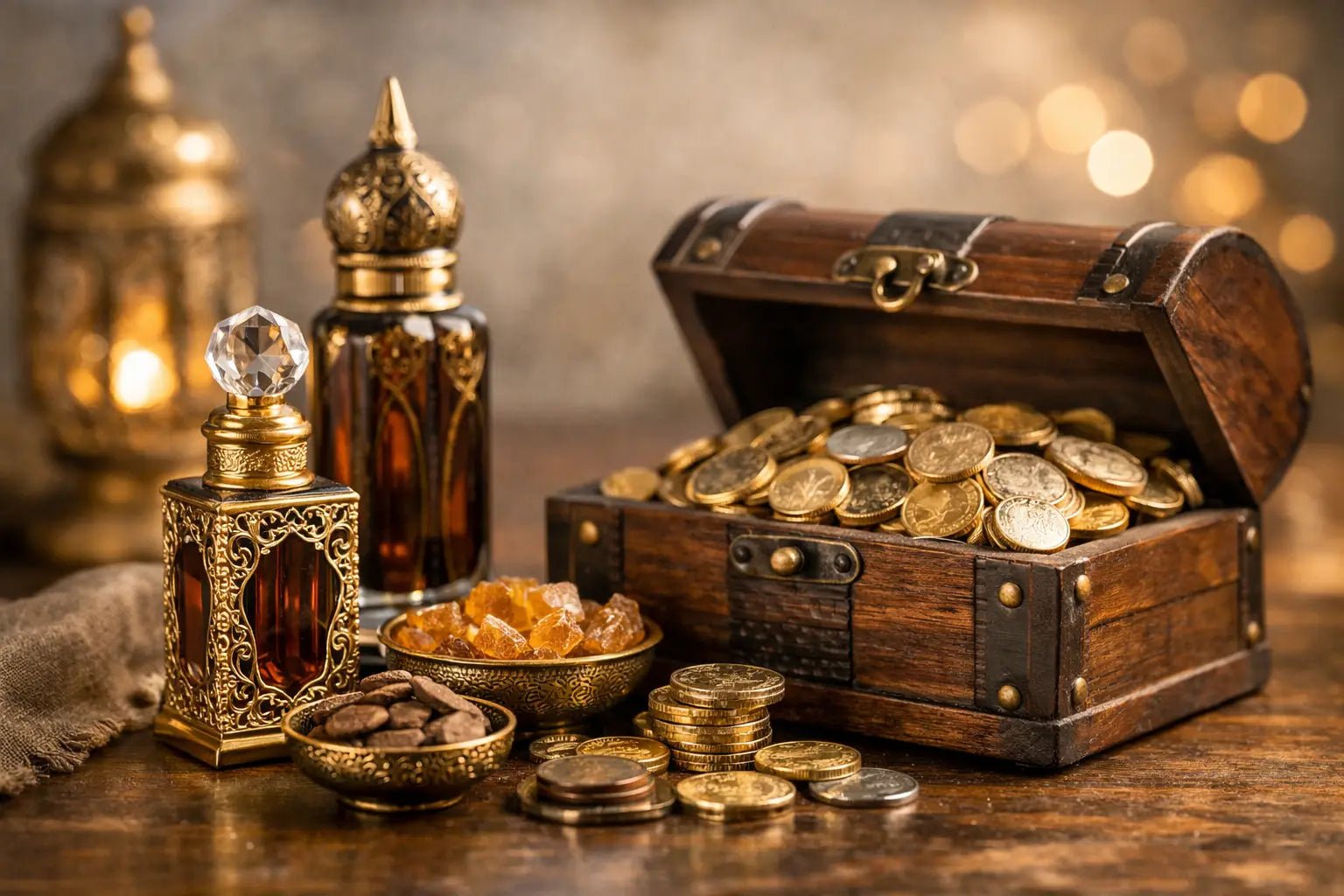
A lot of first-time buyers ask the same thing after seeing a bold, long-lasting fragrance priced far below a designer bottle at the mall - why are Arabian perfumes cheaper? It is a fair question, especially when the packaging looks luxurious, the scent profile feels expensive, and the performance often beats fragrances that cost two or three times more.
The short answer is this: many Arabian perfume brands are built to deliver scent value, not luxury markups. That does not mean every bottle is automatically better, and it definitely does not mean all cheap perfumes are equal. But in many cases, Arabic fragrance houses use a business model that prioritizes strong formulas, fast-moving collections, and accessible pricing instead of charging extra for fashion-house prestige.
Why are Arabian perfumes cheaper than designer brands?
The biggest difference is not always the juice inside the bottle. A lot of the price gap comes from what surrounds the fragrance.
Major Western designer perfumes often carry the overhead of global ad campaigns, celebrity ambassadors, department store placement, glossy in-store displays, and fashion-brand positioning. When you buy one of those bottles, part of what you are paying for is the name on the box. That branding has real market value, but it raises the retail price fast.
Many Arabian perfume houses take a different route. They focus more on product turnover, online demand, and direct fragrance appeal. Instead of pouring huge budgets into prestige marketing, they compete on scent performance, presentation, and price. That is one of the main reasons shoppers can find an original Arabic fragrance that smells rich and wears for hours without paying luxury-counter prices.
There is also a scale factor. Some Middle Eastern fragrance brands produce large volumes of highly popular scents in markets where fragrance is a daily-use category, not just a luxury splurge. When demand is strong and production is efficient, brands can keep pricing aggressive.
Lower price does not always mean lower quality
This is where a lot of US shoppers get surprised. They see a lower price and assume the fragrance must be weak, synthetic, or poorly made. Sometimes that happens, especially at the bottom end of any market. But plenty of Arabian perfumes are affordable because the brand is chasing value, not because the formula is bad.
In fact, many Arabic-inspired and Middle Eastern fragrances are known for using scent profiles that feel dense, expressive, and high-impact. You will often notice richer oud accords, amber, vanilla, musk, saffron, rose, spices, and woods. These notes can create a premium impression quickly, even at a lower retail price.
That said, it depends on the brand and the specific release. Some bottles are original compositions. Others are inspired by popular luxury scents. Some lean smoother and more refined, while others prioritize projection and longevity over subtle blending. Affordable does not mean identical across the board.
The real cost drivers behind Arabian perfume pricing
Less money spent on luxury branding
This is one of the biggest reasons pricing stays lower. A fashion house may treat perfume as an extension of its luxury identity. That means expensive campaigns, premium shelf space, and heavy markup because the customer is buying into status as much as scent.
Arabian fragrance brands often put more of the selling power into the perfume itself. The bottle still matters. The packaging still matters. But the final price is usually not inflated by the same prestige machinery.
Different distribution models
A department store fragrance usually passes through several pricing layers before it reaches the customer. Distributor margins, retail margins, promotional costs, and in-store overhead all get built into the price.
Many Arabian perfumes move through more streamlined channels, especially online. That makes a difference. When a fragrance reaches shoppers with fewer middle steps, the price can stay more competitive without sacrificing authenticity. That is one reason online-first fragrance retailers have helped these brands gain so much traction in the US.
Strong competition inside the category
Middle Eastern fragrance brands compete aggressively with one another. Lattafa, Afnan, Armaf, Rasasi, Maison Alhambra, Paris Corner, and similar houses all know shoppers compare value closely. They are not just competing on scent. They are competing on presentation, performance, hype, and price.
That pressure keeps many bestselling releases affordable. If one brand overprices a fragrance, customers can quickly jump to another option with a similar vibe and better value.
Efficient production and repeatable scent styles
Not every fragrance needs a huge research budget or years of creative development. Some brands release scents faster, build around proven note structures, or respond quickly to what buyers already love. That speed can reduce development costs and help brands bring desirable fragrances to market at a lower price point.
This is especially true in the designer-style alternative space. If a perfume is made to deliver a familiar luxury mood without the luxury-brand markup, the entire pricing strategy changes.
Why some Arabian perfumes smell expensive anyway
Price and scent impression are not the same thing. A perfume can smell expensive because of how it is structured, how long it lasts, and how confidently it wears on skin.
Many Arabian perfumes are designed to make an impact. They often open big, project clearly, and leave a noticeable trail. For shoppers who want compliments, presence, and strong value per spray, that is a major win.
There is also a cultural factor. In many Middle Eastern fragrance traditions, perfume is not treated as a minimal accessory. It is part of daily presentation. That can influence how fragrances are made - richer, fuller, and more noticeable. So even when the retail price is lower, the wearing experience can still feel premium.
Of course, there are trade-offs. Some formulas may feel less airy or less abstract than a high-end niche fragrance. A few may open sharper before settling down. Others may prioritize projection over the ultra-smooth polish some luxury buyers expect. If you care more about scent performance and value than brand prestige, those trade-offs may not matter much.
Are Arabian perfumes cheaper because they use cheaper ingredients?
Sometimes yes, but that is only part of the story.
All fragrance markets use a mix of natural and synthetic materials. That includes expensive niche houses and major designer brands. Synthetics are not automatically bad. In many cases, they improve consistency, performance, and safety while keeping pricing reasonable.
Some affordable Arabian perfumes do use cost-controlled ingredient blends, just like affordable fragrances from any region. But cheaper pricing is not only about raw materials. It is also about lower branding costs, faster product cycles, tighter margins, and more efficient sales channels.
The smarter way to judge value is not to ask whether every ingredient is rare or expensive. Ask whether the scent smells good, performs well, and feels worth the price you paid. For many shoppers, Arabian perfumes score extremely well on that test.
Why US shoppers are buying more Arabic fragrances
The answer is simple: the value is hard to ignore.
A lot of buyers want something that smells luxurious without paying department store prices. They also want fragrances that stand out from the same mainstream bottles everyone else is wearing. Arabian perfumes fit that lane well. They offer strong performance, eye-catching presentation, and scent profiles that feel current on social media while still being distinctive.
That is why these brands keep gaining momentum across the US. Once shoppers try a well-reviewed bottle and realize it is original, long-lasting, and competitively priced, the category starts making a lot more sense. Retailers like Ezenzia have helped make that discovery easier by giving US customers faster access to authentic Arabic fragrances without the usual friction.
So, why are Arabian perfumes cheaper and still worth buying?
Because lower price does not always come from cutting corners. Often, it comes from cutting markup.
Many Arabian perfume brands spend less on prestige branding, move through more efficient channels, compete harder on value, and release fragrances with broad customer appeal. The result is a category where shoppers can get a premium-smelling bottle for far less than they would expect.
The better question is not whether the price is low. It is whether the fragrance delivers. If it smells great, lasts well, and feels like a smart buy, the lower price is not a warning sign. It is the advantage.
If you are fragrance shopping with one eye on performance and the other on price, Arabian perfumes are not cheap in the bad sense. They are simply priced closer to what many customers wish luxury fragrance had cost all along.


